
Introduction
International travel with a dog requires more planning than booking a flight and buying a suitable carrier. Airlines, destination countries, and border authorities can all have different requirements. Understanding these rules early can prevent denied boarding, quarantine issues, or stressful airport delays.
This guide explains How to Fly Internationally with a Dog: Cabin Dimensions, Pet Passports, and IATA Rules in practical terms. It covers airline cabin requirements, pet passports, health documents, carrier standards, and the importance of following international animal transport regulations.
Whether you are relocating with your dog or taking your pet on an international holiday, preparation is essential. A comfortable dog, correct paperwork, and an airline-approved carrier can make the journey much smoother.
How to Fly Internationally with a Dog: Cabin Dimensions, Pet Passports, and IATA Rules
The first step is understanding that international dog travel involves several separate requirements. Your airline may have one set of rules, while your destination country has another.
For example, an airline may permit small dogs in the cabin. However, the destination country may require specific vaccinations, identification, certificates, or parasite treatments.
Therefore, How to Fly Internationally with a Dog: Cabin Dimensions, Pet Passports, and IATA Rules should always begin with research. Check the airline’s pet policy and the official entry requirements for your destination.


Do not rely only on information from other travellers. Rules can change, and requirements can vary depending on your departure country, destination, transit locations, and the dog’s age.
Can Your Dog Travel in the Aircraft Cabin?
Many airlines allow small dogs to travel in the cabin when they meet specific conditions. Usually, the dog must remain inside an approved carrier throughout the flight.
Cabin travel is often limited by the combined weight of the dog and carrier. However, airlines differ considerably. Some focus on total weight, while others have size restrictions or breed limitations.
The carrier must usually fit beneath the seat in front of you. This makes cabin dimensions especially important when planning international travel with a dog.
Before buying a carrier, check your airline’s exact under-seat measurements. A carrier that fits one airline’s aircraft may not fit another airline’s aircraft.
The dog should also be able to remain comfortably inside the carrier. It should have enough space to stand, turn around, and lie down naturally, subject to the airline’s approved carrier specifications.
Understanding International Pet Carrier Requirements
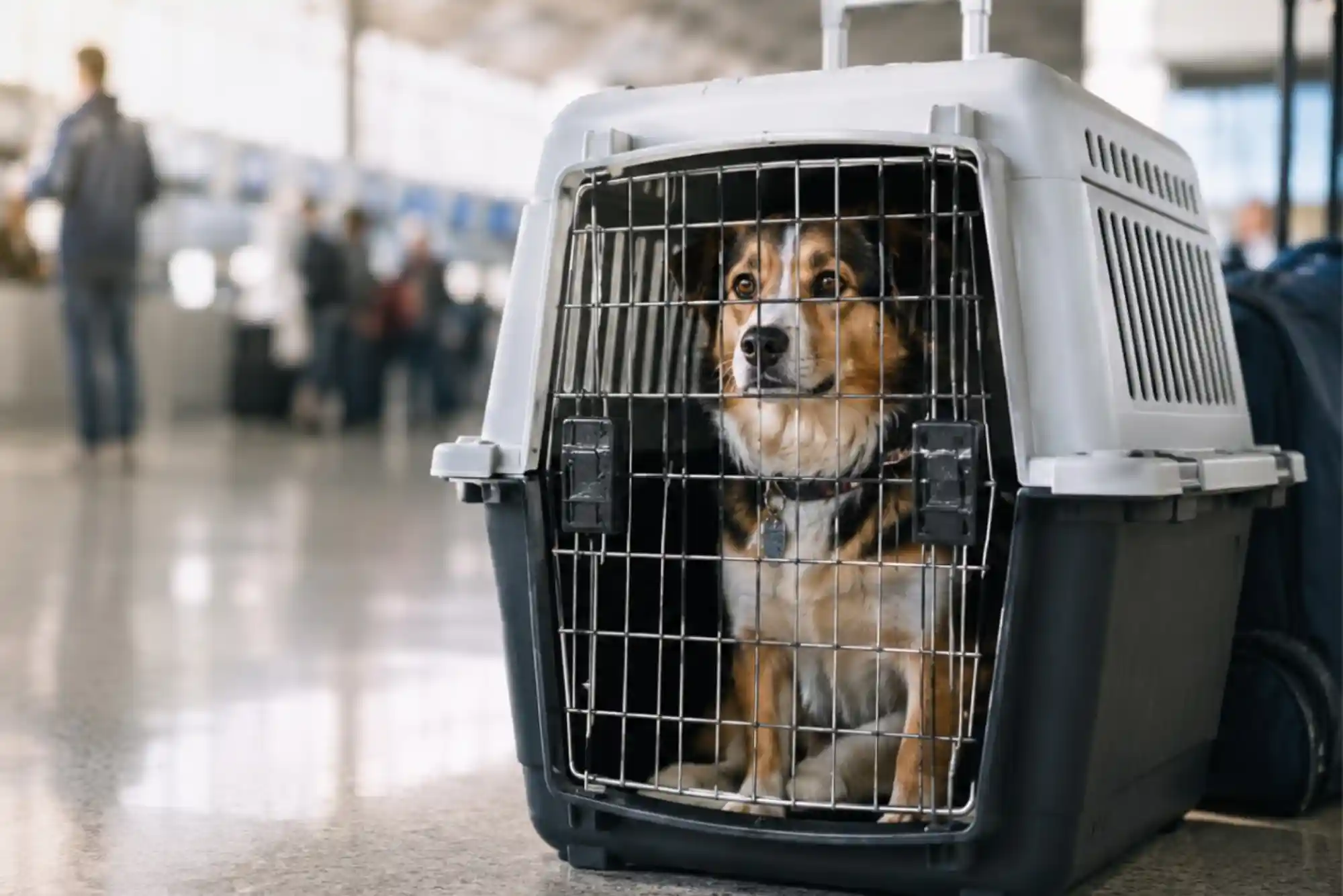
An appropriate carrier is one of the most important parts of your travel preparation. It should be secure, well ventilated, and strong enough to protect your dog during transportation.
For cabin travel, soft-sided carriers are commonly used because they can provide some flexibility under the seat. Nevertheless, the airline must approve the carrier dimensions.
For checked or cargo transportation, requirements can be different. A rigid kennel may be required, especially for larger dogs.
The kennel should provide adequate ventilation and security. It should also allow the animal to maintain a comfortable natural position during transportation.
This is where the IATA Live Animals Regulations become particularly relevant. The International Air Transport Association provides internationally recognised guidance concerning the safe transportation of live animals.
You can review the latest information through IATA Live Animals Regulations before arranging your journey.
What Is a Pet Passport?
A pet passport is a travel document used in certain regions to record important information about an animal. It may contain details about identification, vaccinations, and other veterinary treatments.
However, the term “pet passport” does not mean the same thing everywhere. Some countries use formal pet passport systems, while others require specific veterinary certificates or government-approved documentation.
For this reason, travellers should check the destination country’s official requirements rather than assuming a passport alone is sufficient.
Microchip identification is also important for international dog travel. Many countries require dogs to have an approved microchip before certain vaccinations or travel documents are considered valid.
The timing can matter. In some destinations, the microchip must be implanted before the rabies vaccination. Missing this sequence can create serious problems at the border.
Rabies Vaccination and Health Certificates
Rabies vaccination is one of the most important requirements for international dog travel. Many countries require proof of a valid rabies vaccination before allowing a dog to enter.
Some destinations also require a waiting period after vaccination. Others may require a rabies antibody blood test before entry.
A health certificate may also be required. This document is generally completed by a licensed veterinarian and may need endorsement from an appropriate government authority.
Because these requirements differ between countries, start the process well before your departure date.
Last-minute veterinary appointments can be risky. Some laboratory tests and government endorsements may take considerable time.
How to Fly Internationally with a Dog: Cabin Dimensions, Pet Passports, and IATA Rules
When researching How to Fly Internationally with a Dog: Cabin Dimensions, Pet Passports, and IATA Rules, remember that airline approval and government approval are separate matters.
An airline may accept your dog for travel, but the destination country can still deny entry if documentation is incomplete.
Likewise, a country may allow dogs to enter, while a particular airline may refuse cabin transportation for your dog’s breed, size, or travel route.
This is why experienced pet travellers confirm every stage of the journey. Check the departure airport, airline, transit country, destination country, and return requirements when applicable.
Transit rules deserve special attention. Even if you do not leave an airport, a connecting country may have specific animal-entry or transit conditions.
Preparing Your Dog Before the Flight
Travel preparation should begin weeks before departure. Your dog should become comfortable with its carrier before the journey.
Start by leaving the carrier open at home. Encourage your dog to enter voluntarily using treats, toys, and familiar bedding.
Gradually increase the amount of time your dog spends inside. This helps make the carrier feel like a familiar space rather than a source of anxiety.
Training also matters outside the carrier. A dog that responds reliably to basic cues can be easier to manage in busy airports.
For additional canine training ideas, Pet Skill Building can be useful when preparing a dog for unfamiliar environments.
Good preparation is not only about obedience. It also helps your dog cope with handling, new sounds, crowds, and changes in routine.
You can explore more practical pet-related resources through Skillfacts.
Should You Sedate Your Dog for an International Flight?
Sedation should never be treated as a simple solution for flight anxiety. Sedatives can affect an animal’s breathing, balance, temperature regulation, and ability to respond to stress.
If your dog becomes extremely anxious during travel, speak with your veterinarian well before the flight. Your veterinarian can assess your dog’s health and recommend appropriate strategies.
Never give your dog medication without professional veterinary guidance.
Instead, focus on gradual carrier training, exercise before travel, familiar items, and a calm routine.
What to Expect at the Airport
Arrive early because travelling with a dog can involve additional checks. Your airline may inspect the carrier, documentation, vaccination records, or microchip information.
Keep important documents easily accessible. You may need to present them several times during check-in, security procedures, or border control.
Your dog should remain secure and under control throughout the airport experience. Busy terminals can contain unfamiliar noises, crowds, luggage carts, and other animals.
A calm approach helps. Avoid unnecessary excitement before boarding, and follow airline instructions carefully.
Common Mistakes to Avoid
One common mistake is checking only the airline’s requirements. International pet travel also depends on government regulations.
Another mistake is buying a carrier without checking the airline’s exact dimensions. Even a high-quality carrier may be rejected if it is too large for the assigned aircraft.
Travellers can also underestimate paperwork deadlines. Rabies vaccinations, blood tests, certificates, and government endorsements may have specific timing requirements.
Finally, do not assume that a rule applying to one destination also applies elsewhere. Pet import regulations can be very different between countries.
Frequently Asked Questions
Can I take my dog on an international flight?
Yes, many airlines allow dogs to travel internationally. However, eligibility depends on the airline, route, dog size, breed, carrier, and destination requirements.
What size carrier is allowed for a dog in the cabin?
There is no universal cabin carrier dimension for every airline. The carrier generally needs to fit beneath the seat. Always confirm the exact dimensions with your airline before purchasing one.
Does my dog need a passport to fly internationally?
Some destinations use pet passports, while others require veterinary certificates and additional documentation. The required paperwork depends on the destination country’s rules.
Does my dog need a rabies vaccination for international travel?
Many countries require a valid rabies vaccination. Some destinations also require additional testing or waiting periods. Check the destination’s current import requirements before travelling.
Are IATA rules mandatory for every airline?
IATA’s Live Animals Regulations provide internationally recognised guidance for transporting live animals. However, individual airlines can impose their own requirements. Always check the airline’s current policy.
Can my dog fly in the cabin on every international route?
No. Cabin pet policies vary between airlines and routes. Some airlines do not permit pets in the cabin, while others restrict certain destinations or aircraft.
Conclusion
Learning How to Fly Internationally with a Dog: Cabin Dimensions, Pet Passports, and IATA Rules can make international pet travel much easier. The key is to prepare early and verify every requirement.
Check your airline’s carrier dimensions, confirm vaccination and identification requirements, and research your destination’s entry rules. Also, review applicable IATA Live Animals Regulations and allow enough time for veterinary paperwork.