Introduction
Cats naturally have a very low thirst drive due to their desert ancestry. In the wild, felines get most of their required moisture directly from the prey they consume. When living on modern dry kibble diets, many domestic cats fall into a state of chronic, low-grade dehydration. This hidden lack of water places immense stress on their kidneys and urinary tract over time. Providing a continuous, appealing source of moving water is one of the best ways to encourage healthy drinking habits. Running water mimics natural streams and instinctively triggers a cat’s curiosity and desire to drink. However, not all water fountains are created equal when it comes to safeguarding your cat’s overall health.
Uncovering the Hidden Danger of Plastic Fountains
For years, cheap plastic cat water fountains flooded the market because they were lightweight and inexpensive to manufacture. Unfortunately, veterinarians now recognize plastic as a primary culprit behind chronic feline chin acne. Plastic surfaces easily develop microscopic scratches and abrasions from regular washing and daily wear. These tiny crevices become a breeding ground for stubborn bacteria, oils, and biofilms that ordinary soap cannot completely wash away. Every time your cat presses its chin against the plastic basin to drink, those bacteria transfer directly into the hair follicles. This leads to stubborn blackheads, painful swelling, secondary infections, and endless vet bills.
Understanding Feline Chin Acne and Its Triggers
What Causes Chin Acne in Cats?
Feline chin acne is a form of keratinization disorder where the cat’s skin produces excess keratin around the hair follicles on the lower jaw. When combined with trapped sebum and environmental bacteria, hard black crusts and swollen bumps form on the skin. While poor grooming and stress contribute to the condition, material toxicity and surface contamination are the leading triggers in household environments. Cats that eat out of plastic bowls or drink from plastic fountain spouts show a vastly higher rate of breakouts than cats using inert materials. The constant friction and localized bacterial exposure break down the delicate skin barrier on the chin.
Why Material Choice Matters More Than You Think
Choosing the right material for your pet’s dinnerware and water station is just as important as the quality of the water itself. Porous materials like low-grade plastic and unglazed ceramics trap oils and microbes beneath the surface layer. As the plastic degrades from UV light or hot dishwasher cycles, it leaches chemicals and provides a cozy home for pathogens. Transitioning away from plastic is the single most effective first step you can take to clear up stubborn chin acne. Stainless steel offers a smooth, non-porous shield that completely locks out bacteria and prevents unwanted oily residue buildup.
Why Stainless Steel Cat Water Fountains Are the Gold Standard
Non-Porous and Hygienic Superiority
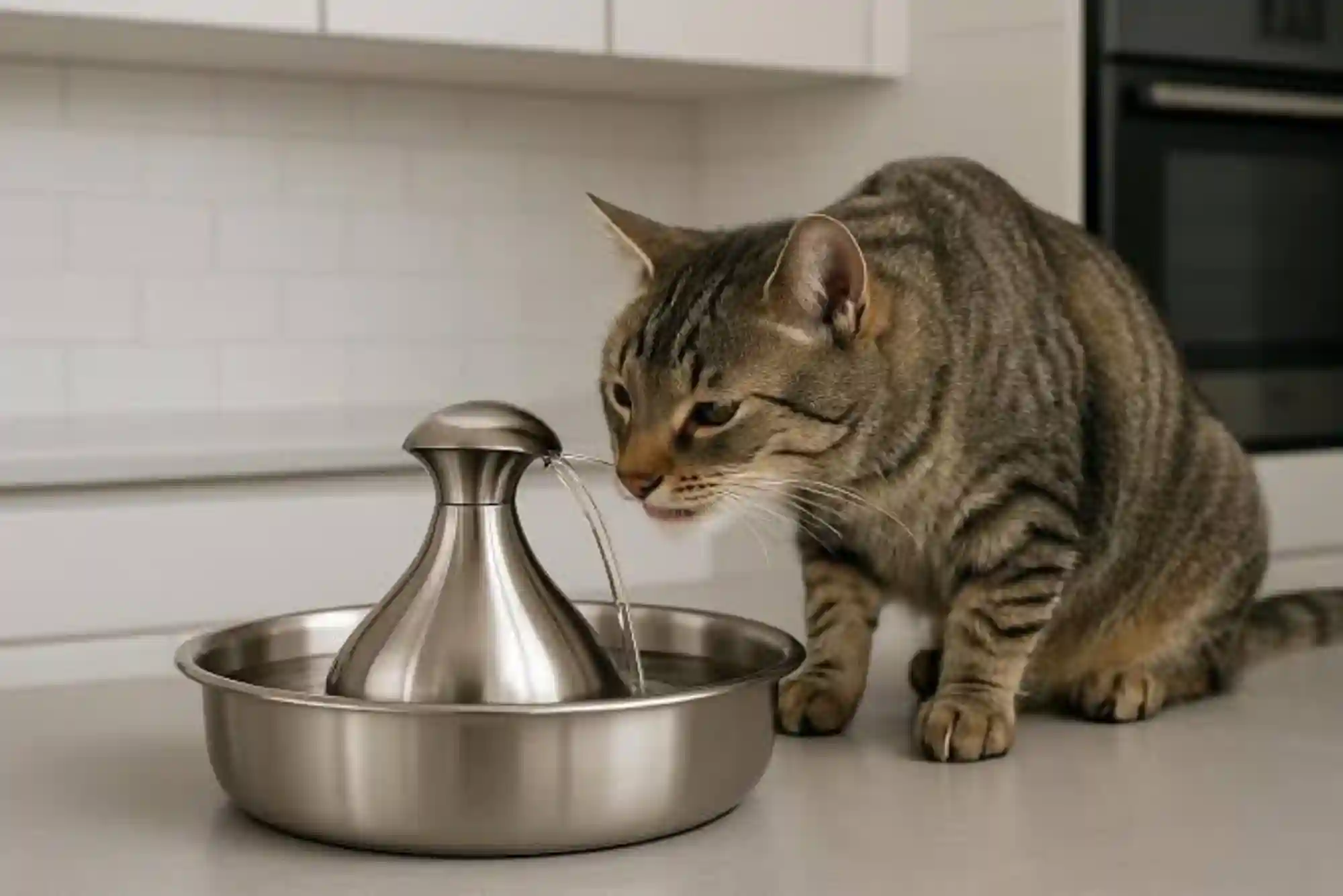
Stainless steel is naturally non-porous, meaning bacteria, slime, and feline saliva cannot penetrate or hide inside the metal. Unlike plastic, a high-grade stainless steel basin resists scratches from aggressive pawing or daily scrubbing. This smooth finish ensures that biofilm has nowhere to anchor, making your daily rinsing routine infinitely more effective. When you sanitize stainless steel properly, you return the surface to a clinical state of cleanliness. Your cat’s chin touches clean, sterile metal rather than a biofilm-laden plastic dish every single time they take a sip.
Durability, Stability, and Longevity
Cats are notoriously playful creatures that love to knock over water bowls or drag lightweight plastic dishes across the kitchen floor. Stainless steel fountains carry enough natural weight to stay firmly planted in place during enthusiastic drinking sessions. They do not crack when dropped into the sink or warp when exposed to hot water during deep cleaning. High-grade stainless steel does not chip like ceramic, eliminating the risk of sharp edges cutting your cat’s sensitive chin tissue. Investing in a sturdy steel fountain means buying a reliable hydration station that lasts for many years.


Temperature Regulation and Water Freshness
Stainless steel possesses natural thermal properties that help keep your cat’s drinking water cool and refreshing for longer periods. Cats frequently reject water that feels warm, stale, or stagnant sitting out in a plastic container. The cool touch of the steel basin enhances the crisp taste of the water circulating through the filtration system. Combined with carbon and ion-exchange filters, a steel fountain delivers clean, odor-free water that appeals to even the pickiest felines.
Key Features to Evaluate Before Buying
Pump Quality and Quiet Operation
A great cat fountain is useless if the motor hums so loudly that it scares your pet away from the station. Look for models featuring ultra-quiet, low-voltage submersible pumps that operate with a gentle whisper rather than a harsh buzz. A quiet motor also gives you peace of mind if you place the fountain near your bedroom or living room area. Furthermore, modern pumps should include an auto-shutoff safety feature that triggers if the water level drops too low. This protects the motor from burning out and keeps your home safe from electrical hazards.
Filtration Stages and Water Purity
Multi-stage filtration is essential for removing pet hair, saliva, dust, and heavy metals from the circulating water stream. A quality stainless steel fountain typically utilizes a pre-filter sponge, an activated carbon layer, and an ion-exchange resin. The sponge catches large debris before it reaches the impeller, while the carbon eliminates unpleasant chlorine tastes and odors. The ion-exchange layer softens hard water by trapping minerals that could otherwise contribute to feline urinary tract issues. Changing these filter cartridges every two to four weeks guarantees optimal performance and crystal-clear water.
Ergonomics and Chin Clearance Design
When selecting a model to prevent chin acne, pay close attention to the shape of the drinking surface and spout height. Avoid narrow bowls or deep drinking wells that force your cat’s chin to rub constantly against the basin wall. A wide, shallow stainless steel drinking tray allows your cat to lap water comfortably without squeezing its lower jaw into dirty corners. Some advanced designs feature gentle bubbling or waterfall options that keep the drinking zone elevated and accessible. Ergonomic design directly reduces skin irritation while encouraging higher daily water intake.
Daily Care and Maintenance of Stainless Steel Fountains
The Importance of Regular Cleaning Routines
Even the finest stainless steel fountain requires consistent maintenance to remain safe and hygienic for your beloved feline companion. Saliva, dust, and airborne particles mix with circulating water to form a thin, slippery film if left unattended. You should rinse the steel basin and wipe down the surfaces every single day with warm water. Once a week, you need to disassemble the entire unit, including the pump and impeller housing, for a thorough scrub. Neglecting pump maintenance allows hair and slime to choke the motor, reducing water flow and filtering efficiency.
Safe Sanitization Methods for Feline Health
When washing your cat’s stainless steel fountain, skip harsh chemical bleaches or toxic detergents that leave chemical residues behind. Instead, use a mild, pet-safe dish soap and a clean sponge dedicated solely to your cat’s gear. For a natural deep clean, soak the stainless steel parts in a solution of equal parts warm water and white vinegar. Vinegar dissolves hard water scale and kills lingering bacteria without endangering your cat’s sensitive respiratory system. Always rinse every component thoroughly with clean running water before reassembling and refilling the fountain.
Frequently Asked Questions
Can stainless steel cat fountains completely cure feline chin acne?
Stainless steel fountains eliminate surface bacteria and material irritation, which stops active breakouts from worsening and prevents new ones. However, if your cat has a severe or chronic case of chin acne, you should consult your veterinarian. Vets often prescribe medicated washes, topical ointments, or antibiotics to clear up deep follicular infections alongside material changes. Switching to stainless steel works as a crucial preventative foundation rather than a standalone medical cure.
How often should I change the filter in a stainless steel cat fountain?
You should replace the carbon and sponge filters every two to four weeks depending on how many cats share the fountain. If you live in an area with hard water or have long-haired cats that shed heavily, change the filters every two weeks. Regular filter replacement ensures maximum odor removal, proper water softening, and optimal pump longevity.
Why is my cat scared of the new stainless steel water fountain?
Cats are creatures of habit and often feel suspicious of new objects, moving water sounds, or unfamiliar reflections on shiny metal surfaces. To help your cat adjust, place the new fountain next to their old water bowl while leaving the old bowl active. You can leave the fountain turned off for the first day so your cat gets used to the visual presence of the steel basin. Once they drink from it peacefully, turn the pump on to the lowest flow setting.
Is stainless steel better than ceramic for cat water fountains?
Both stainless steel and ceramic are superior to plastic because they are non-porous and easy to sanitize. However, stainless steel wins on durability because it will never chip, crack, or break if accidentally knocked onto a hard floor. Stainless steel is also lighter and easier to lift during daily water changes and sink washdowns.
Conclusion
Hydration and skin health go hand in hand when it comes to keeping your cat happy, comfortable, and vibrant throughout every life stage. Ditching old plastic bowls and upgrading to a high-quality stainless steel cat water fountain eliminates a major source of hidden bacterial stress. Your cat’s chin will stay clean and clear, and their kidneys will thank you for the steady stream of fresh water. Evaluate your current pet setup today and make the switch to a durable, hygienic stainless steel fountain. Explore top-rated stainless steel cat fountains today and give your feline friend the gift of pure, clean hydration right now.