
Introduction
Introducing two adult dogs can feel stressful, especially when you worry that a simple greeting could turn into a fight. However, the first meeting does not need to be rushed. Learning how to introduce two adult dogs on neutral territory without fighting gives both dogs time to observe, communicate, and become comfortable without unnecessary pressure.
Adult dogs have different personalities, histories, social skills, and tolerance levels. Some quickly accept another dog, while others need several carefully managed meetings. Therefore, your goal should not be instant friendship. Instead, aim for calm behavior and safe coexistence.
A neutral location can reduce territorial pressure. A gradual approach can also prevent the dogs from feeling trapped or overwhelmed. With the right preparation, body-language awareness, and patience, you can create a much safer first experience.
Why Neutral Territory Matters for Adult Dogs
When learning how to introduce two adult dogs on neutral territory without fighting, location is one of the first decisions to make. A neutral area should be somewhere neither dog considers its personal territory.
A quiet outdoor walking route or spacious unfamiliar area can work well. Avoid meeting directly inside one dog’s home or yard. Those locations may increase territorial behavior and make the introduction more difficult.
The area should also provide enough space for the dogs to move apart. Ideally, there should be few distractions, unfamiliar dogs, toys, food, or other valuable resources nearby.


The purpose of neutral territory is simple. Neither dog should feel responsible for defending a familiar space.
Prepare Before the Dogs Meet
Good introductions begin before the dogs see each other. Both handlers should understand the plan and agree to move slowly.
Each dog should have a secure collar or harness and a standard leash. Retractable leashes are generally unsuitable because they offer less predictable control during an important introduction. High-value treats can also help reinforce calm behavior.
Ideally, use one calm handler for each dog. This arrangement allows both people to watch body language while maintaining appropriate distance.
It is also helpful to avoid meeting when either dog is extremely excited, tired, sick, or already stressed. A calm starting point makes communication much easier.
How to Introduce Two Adult Dogs on Neutral Territory Without Fighting
The safest approach usually begins with distance rather than direct contact. Instead of walking the dogs directly toward each other, have both handlers walk in the same direction.
Start far enough apart that both dogs can notice each other without becoming tense. The correct distance depends on the individual dogs.
If one dog immediately pulls, barks, freezes, or stares intensely, increase the distance. The dogs need enough space to remain responsive to their handlers.
Once both dogs are walking calmly, continue the parallel walk. This gives them an opportunity to see each other without the pressure of a face-to-face greeting. Parallel walking is widely recommended because it creates a lower-pressure introduction.
As the dogs become more comfortable, gradually reduce the distance. Do this only when both dogs remain relaxed.
If tension increases, simply create more space again. Moving backward is not failure. It is an important part of successful dog introductions.
Watch the Dogs’ Body Language Carefully
Understanding body language is essential when learning how to introduce two adult dogs on neutral territory without fighting.
Relaxed dogs may have loose bodies, natural movement, soft eyes, and relaxed facial expressions. They may sniff the ground, glance toward their handler, or casually notice the other dog before continuing their walk.
On the other hand, tension can appear through a stiff body, hard staring, raised hackles, intense fixation, growling, barking, or attempts to move away. These signals should not be ignored.
A wagging tail does not automatically mean a dog is comfortable. Tail position, body stiffness, facial expression, movement, and overall behavior should be considered together.
If either dog appears uncomfortable, increase distance immediately. Allowing a dog to disengage can prevent the situation from escalating.
Gradually Allow Closer Interaction
Once both dogs can walk calmly near each other, you can consider a brief greeting. Do not rush this stage.
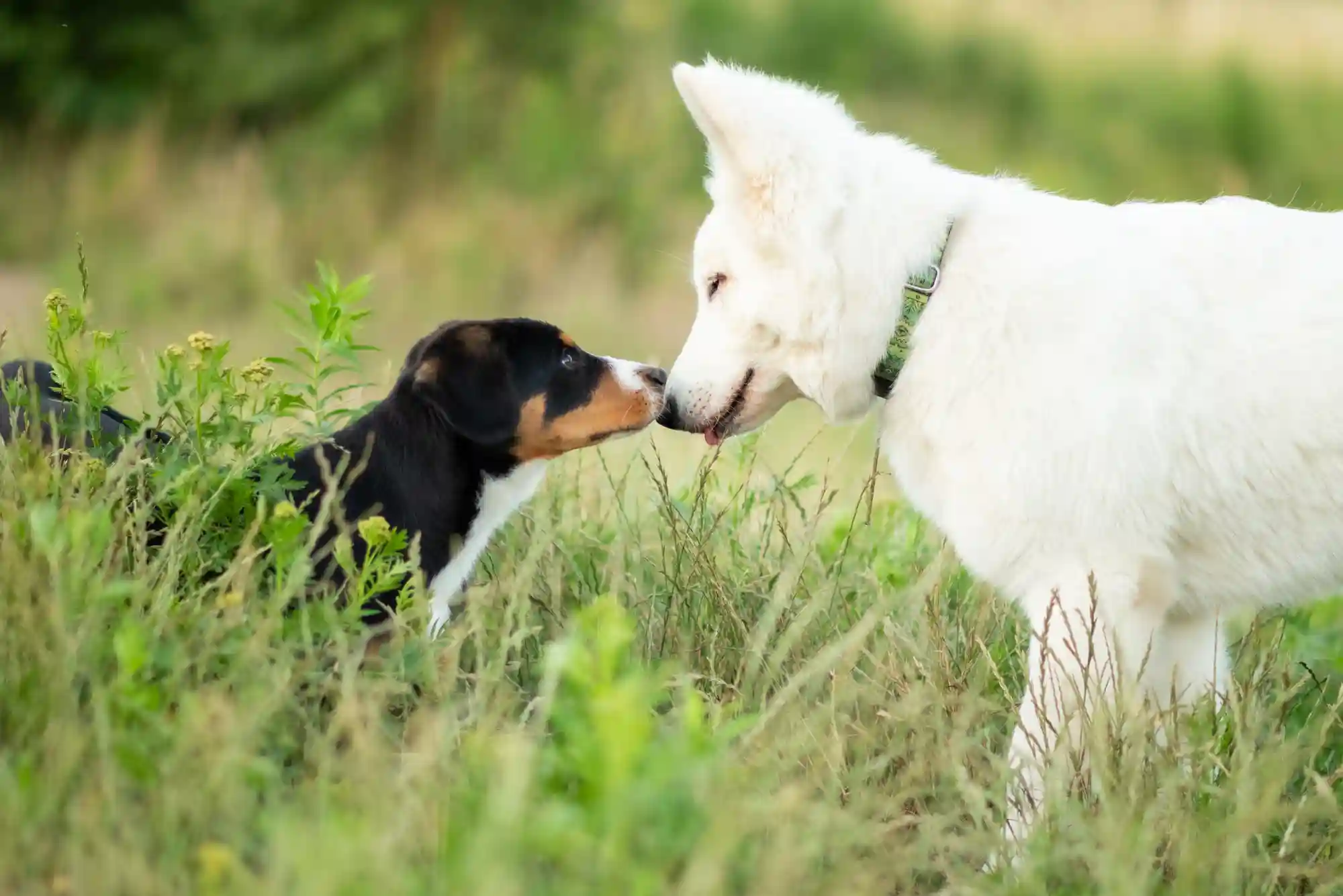
Allow the dogs to approach from an angle rather than forcing a direct nose-to-nose encounter. Keep the interaction brief and watch both dogs closely.
After a short sniff, encourage them to continue walking. This prevents the greeting from becoming an intense staring contest or prolonged interaction.
Remember that successful introductions do not require the dogs to play. Calmly walking beside each other can be a very positive result.
In fact, neutrality is often a better early goal than excitement. Two dogs that can comfortably ignore each other are already developing useful social skills.
Never Force a Dog to Say Hello
One of the biggest mistakes owners make is assuming both dogs must interact immediately.
If one dog repeatedly moves away, hides behind the handler, freezes, or avoids the other dog, respect that communication. Give the dog more space rather than forcing another approach.
Similarly, do not drag a reluctant dog toward another dog. Leash pressure can increase frustration and anxiety.
The objective is to create positive associations. The dogs should learn that being near each other does not automatically mean losing control of their personal space.
What to Do If the Dogs Start Showing Aggression
Even with careful preparation, some adult dogs may react strongly. If either dog lunges, snaps, repeatedly growls, or becomes intensely focused, increase distance immediately.
Do not punish warning signals such as growling. A growl can communicate discomfort before a situation becomes more serious.
Instead, calmly create space and allow both dogs to settle. If they cannot relax at a safe distance, end the session.
Repeated aggression, serious reactivity, or previous fighting history deserves professional guidance. A qualified trainer or veterinary behavior professional can help develop an individualized introduction plan. PetMD also recommends professional support when fear, reactivity, or aggression complicates an introduction.
Safety should always come before completing the meeting.
Moving From Neutral Territory to the Home
A successful outdoor introduction does not automatically mean the dogs are ready to share everything at home.
Before entering the house, remove valuable items that could cause competition. Put away toys, bones, food bowls, and other high-value resources.
Give each dog its own resting area. Separate feeding spaces are also helpful because mealtimes can create unnecessary competition.
Continue supervising their interactions during the early adjustment period. Gradually increase their freedom as they demonstrate calm and predictable behavior.
Most importantly, do not assume that two dogs must share every resource. Individual beds, feeding areas, toys, and quiet spaces can reduce unnecessary conflict.
Common Mistakes to Avoid
Rushing the first greeting is one of the most common mistakes. Dogs need time to process unfamiliar smells, movements, sounds, and body language.
Another mistake is choosing a crowded dog park as the meeting location. A busy environment can add excitement and reduce your ability to create distance.
Allowing the dogs to “work it out” can also be dangerous. Dogs do communicate naturally, but responsible management prevents disagreements from becoming fights.
Finally, avoid focusing only on whether the dogs play together. Calm coexistence is valuable. Some adult dogs may become close companions, while others simply learn to live peacefully together.
Both outcomes can be successful.
How Long Does It Take for Two Dogs to Get Used to Each Other?
There is no universal timeline. Some dogs become comfortable after one or several successful meetings. Others need days or weeks of gradual exposure.
Age, temperament, previous socialization, past experiences, and individual preferences can all affect the process.
Therefore, avoid setting a deadline. If the dogs remain relaxed, you can gradually increase their interaction. If tension appears, slow down.
The quality of each interaction matters more than completing the process quickly.
Frequently Asked Questions
What is the best way to introduce two dogs to each other?
The best approach is usually a gradual introduction on neutral territory. Begin with parallel walking at a comfortable distance. Then reduce the distance slowly while monitoring both dogs’ body language.
How long does it take for two dogs to get used to each other?
The timeline varies between individual dogs. Some become comfortable quickly, while others require multiple sessions over several days or weeks. Avoid rushing simply because the first meeting went well.
Should dogs meet face-to-face immediately?
No. A forced face-to-face greeting can create unnecessary pressure. Parallel walking allows dogs to notice one another while maintaining distance and movement.
Should dogs meet off-leash the first time?
Usually, the first meeting should remain controlled. Leashes allow handlers to create distance if either dog becomes uncomfortable. Off-leash interaction should only happen when the environment is secure and both dogs have demonstrated appropriate behavior.
How can I tell if two dogs like each other?
Look for relaxed bodies, soft expressions, natural movement, comfortable sniffing, and the ability to disengage. Stiff posture, hard staring, raised hackles, growling, or repeated lunging indicate that you should create more distance.
Conclusion
Knowing how to introduce two adult dogs on neutral territory without fighting is primarily about patience, distance, and careful observation. A successful introduction does not require instant friendship.