
Introduction
As dogs grow older, everyday movements can become surprisingly difficult. Jumping onto a bed, climbing into an SUV, or stepping down from furniture may place unnecessary stress on aging joints. This is especially important for dogs dealing with arthritis, stiffness, weakness, or previous orthopedic problems.
The Best Orthopedic Dog Ramps for Beds and SUVs: Preventing Joint Strain in Senior Dogs can make these movements easier. A properly designed ramp replaces a sudden jump with a controlled walk. As a result, your dog can reach favorite places with less impact on the joints.
Veterinary guidance also supports using ramps as mobility aids for senior dogs. They can reduce the strain associated with jumping onto elevated surfaces.
However, choosing the right ramp requires more than picking the highest-rated product. Your dog’s weight, mobility, confidence, and the height of the destination all matter. The ramp must also provide enough traction and stability.
Why Senior Dogs May Need an Orthopedic Ramp
A young, healthy dog can often jump onto a couch without hesitation. An older dog may not have the same strength, balance, or joint flexibility.
Age-related changes can affect the hips, knees, elbows, shoulders, and spine. Arthritis can make bending and pushing upward uncomfortable. Some dogs may also experience mobility problems associated with conditions such as hip dysplasia or intervertebral disc disease.


The Best Orthopedic Dog Ramps for Beds and SUVs: Preventing Joint Strain in Senior Dogs are designed to reduce the need for these forceful movements. Instead of jumping vertically, your dog walks up a gradual incline.
This difference can matter considerably for an aging dog. PetMD notes that ramps can help reduce joint strain associated with jumping onto elevated surfaces.
You may notice subtle warning signs before your dog completely refuses to jump. They might pause before getting onto the bed, hesitate near the vehicle, or move more slowly than before.
Other signs can include difficulty standing, reluctance to use stairs, or changes in how the dog approaches furniture. These symptoms deserve attention rather than being dismissed as normal aging.
How Dog Ramps Help Prevent Joint Strain
Jumping requires a dog to generate considerable force with its legs. Landing creates another impact. Repeated jumping may therefore be uncomfortable for dogs with existing joint problems.
A ramp changes the movement pattern. Instead of jumping from the floor to the bed, the dog gradually walks upward.
The Best Orthopedic Dog Ramps for Beds and SUVs: Preventing Joint Strain in Senior Dogs should therefore have a gentle incline whenever possible. A longer ramp generally allows a less aggressive slope.
The surface is equally important. Senior dogs need secure footing because slipping can cause fear, instability, or injury. Veterinary guidance recommends ramps with non-slip surfaces and appropriate weight capacity.
A stable ramp can also help preserve independence. Your dog may continue accessing the bed or vehicle without requiring you to lift them every time.
Choosing the Best Ramp for a Bed
A bed ramp needs to balance comfort, stability, and available floor space. A short ramp may fit conveniently in a bedroom. However, it can become too steep if the bed is high.
Measure the distance from the floor to the mattress surface. Then consider where the ramp will sit and how much room is available.
For a senior dog, a gentle walking angle is usually more comfortable than a steep climb. The ramp should also be wide enough for your dog to walk naturally without feeling confined.
The surface should provide reliable traction. Carpeted or textured walking surfaces can give older dogs more confidence.
A bed ramp should also remain firmly positioned during use. If the ramp shifts when your dog steps onto it, your dog may become frightened and avoid it.
For dogs with significant arthritis or mobility limitations, discuss the ramp setup with your veterinarian. A professional can help determine whether a ramp is appropriate for your dog’s specific condition.
Choosing the Best Ramp for an SUV
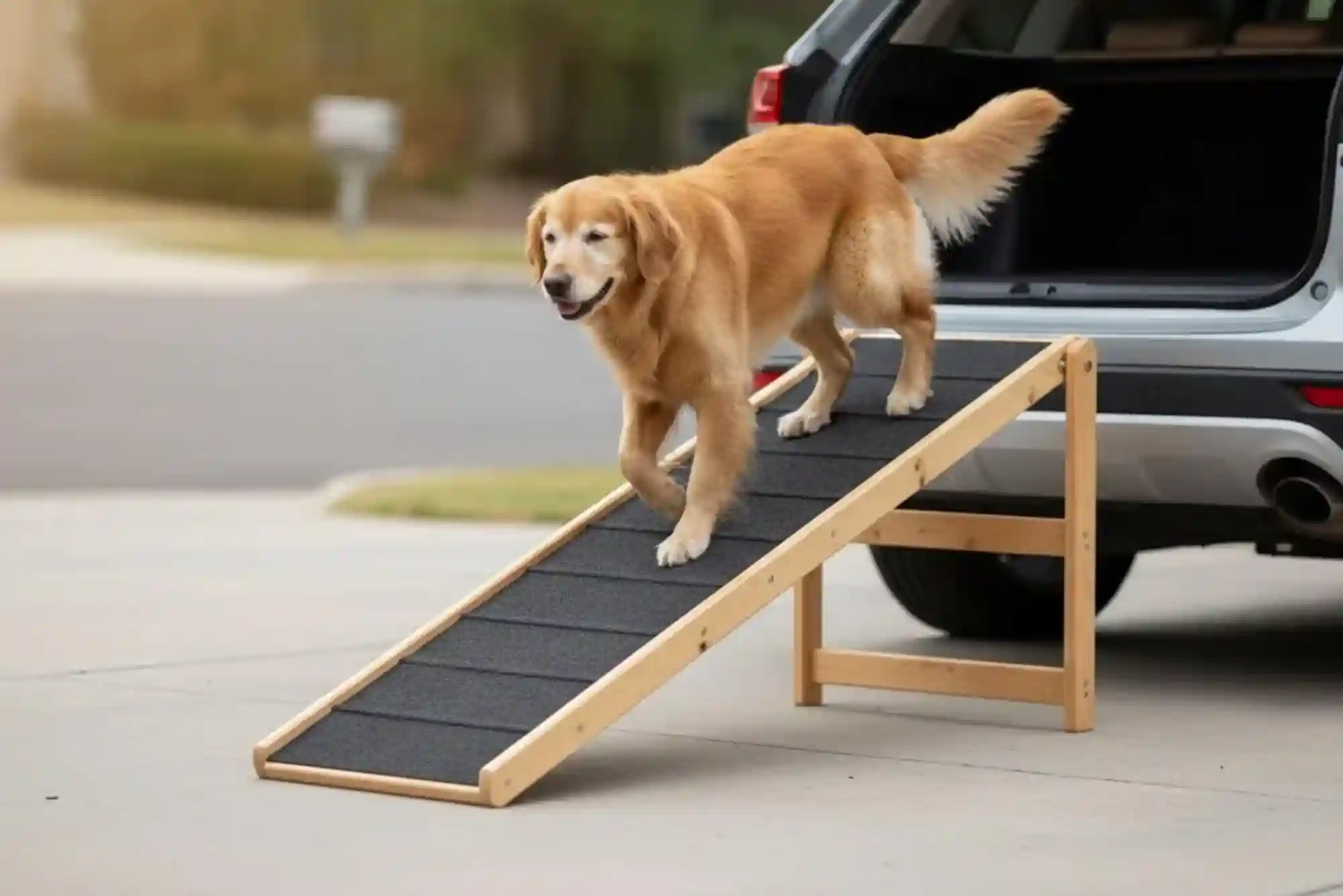
SUVs present a different challenge because the loading height can be considerable. A ramp that works perfectly beside a low bed may become too steep when placed against an SUV.
This is where length becomes particularly important. A longer ramp can create a more gradual path from the ground into the vehicle.
The Best Orthopedic Dog Ramps for Beds and SUVs: Preventing Joint Strain in Senior Dogs should also be practical for travel. A heavy ramp may be stable but difficult to move. A lightweight model may be convenient but needs enough strength for your dog’s size.
Check the manufacturer’s weight rating before purchasing. Never assume that a ramp is suitable simply because your dog can physically fit on it.
SUV ramps should also have secure contact points. The upper end must remain stable against the vehicle while your dog walks upward.
For regular travel, folding or telescoping designs can make storage easier. However, portability should never come at the expense of stability or traction.
Ramp Versus Dog Stairs for Senior Dogs
Many owners wonder whether ramps or stairs are better for older dogs. There is no universal answer because every dog has different mobility needs.
Ramps can be particularly useful for dogs that struggle with joint flexion or jumping. They allow continuous movement rather than requiring the dog to lift its body over individual steps.
Stairs may work for smaller, agile dogs that still have good balance. However, dogs with arthritis or certain back problems may find ramps easier. PetMD similarly notes that ramps are often gentler for dogs with arthritis and mobility concerns.
The dog’s confidence also matters. A very steep or narrow ramp may make a nervous dog uncomfortable. In that situation, a wider design with better traction may be more suitable.
Therefore, the Best Orthopedic Dog Ramps for Beds and SUVs: Preventing Joint Strain in Senior Dogs should always be selected according to the individual dog’s condition.
Important Features to Look For
A good orthopedic dog ramp should feel stable under your dog’s weight. Flexing, wobbling, or shifting can make the equipment unsafe.
Traction is another essential feature. Smooth plastic or polished surfaces can become difficult for older dogs to navigate, particularly if their paws are weak.
Width matters as well. Larger dogs usually need enough space to walk without placing their feet too close together.
Weight capacity should always exceed your dog’s actual weight. This provides an appropriate safety margin and reduces unnecessary stress on the ramp.
For SUV use, portability becomes more important. Look for a design that can be folded or stored conveniently without compromising structural strength.
For home use, appearance and storage may also influence your choice. Some ramps are designed to resemble furniture and can remain beside a bed or sofa.
Helping Your Dog Learn to Use a Ramp
Buying a ramp does not guarantee that your dog will immediately use it. Some senior dogs are cautious about unfamiliar surfaces.
Start by placing the ramp on the floor. Let your dog investigate it without pressure.
You can encourage exploration with praise, treats, or a favorite toy. Once your dog becomes comfortable, gradually introduce a small incline.
Never force your dog onto the ramp. Pulling a nervous dog upward can create a negative association with the equipment.
AKC guidance recommends short training sessions and positive reinforcement. It also emphasizes using a stable surface and avoiding pressure when a dog is uncomfortable.
Once your dog understands the ramp, practice using it for the actual bed or vehicle. Keep the first sessions calm and controlled.
Preventing Slips and Falls
Even the best orthopedic ramp cannot compensate for poor traction. Senior dogs often need additional support around the home.
Place non-slip mats around the bottom and top of the ramp. This helps prevent your dog from slipping as they transition between surfaces.
You should also inspect the ramp regularly. Look for worn carpeting, loose components, cracks, or damaged traction material.
The surrounding floor matters too. Hardwood and smooth tile can be challenging for dogs with declining mobility. Rugs, runners, or appropriate traction aids may help create safer pathways.
A comprehensive senior-dog mobility setup therefore involves more than one piece of equipment. Flooring, bedding, exercise, weight management, and veterinary care can all contribute to comfort.
When a Ramp Is Not Enough
A ramp is a mobility aid, not a treatment for an underlying medical condition.
If your dog suddenly refuses to climb, develops significant lameness, cries when moving, or shows a major change in mobility, contact your veterinarian.
Sudden changes deserve particular attention. They may indicate pain, injury, or another condition requiring professional assessment.
A veterinarian can evaluate your dog’s joints and movement. They may recommend medication, rehabilitation, weight management, exercise changes, or additional mobility support.
The goal is not simply to make your dog climb a ramp. The goal is to make everyday movement safer and more comfortable.
Making a Ramp Part of Your Senior Dog’s Routine
Consistency can make mobility equipment much more useful. If your dog regularly sleeps on the bed, keep the ramp available instead of bringing it out occasionally.
Similarly, if your dog travels frequently, practice using the vehicle ramp before an important trip.
Observe how your dog behaves. A ramp should make movement easier rather than creating another obstacle.
Watch for changes in walking speed, hesitation, posture, or willingness to use the equipment. These observations can also give your veterinarian useful information.
Remember that senior dogs may need different support as they age. A ramp that works today might eventually need to be replaced with a wider, longer, or more supportive option.
Frequently Asked Questions
Do dogs prefer ramps or stairs?
There is no single preference shared by every dog. Individual mobility, confidence, size, and previous experience all influence the choice. PetMD recommends considering the dog’s specific needs and consulting a veterinarian when necessary.
What are the benefits of a dog ramp?
A dog ramp can reduce the need for jumping and provide a gentler route to elevated surfaces. This can be especially helpful for senior dogs with arthritis or mobility problems.
Are ramps or stairs better for dogs?
It depends on the individual dog. Ramps can be useful for dogs that struggle with jumping or joint flexion. Stairs may work for dogs with better balance and mobility.
What is an alternative to a dog ramp?
Possible alternatives include dog stairs, a single low step, or a mobility support harness. The most appropriate option depends on the dog’s physical condition and the height being reached.
How do I get my dog to use a ramp?
Introduce the ramp gradually and use positive reinforcement. Allow your dog to investigate it first, then practice on a low incline. Avoid pushing or pulling your dog onto the ramp.
Conclusion
The Best Orthopedic Dog Ramps for Beds and SUVs: Preventing Joint Strain in Senior Dogs can provide valuable support when jumping becomes difficult. The right ramp can reduce unnecessary impact while helping an older dog maintain independence.